SPECIFICATIONS
| Series | UM-FBC Series |
| Part No. | 5371-273-100 |
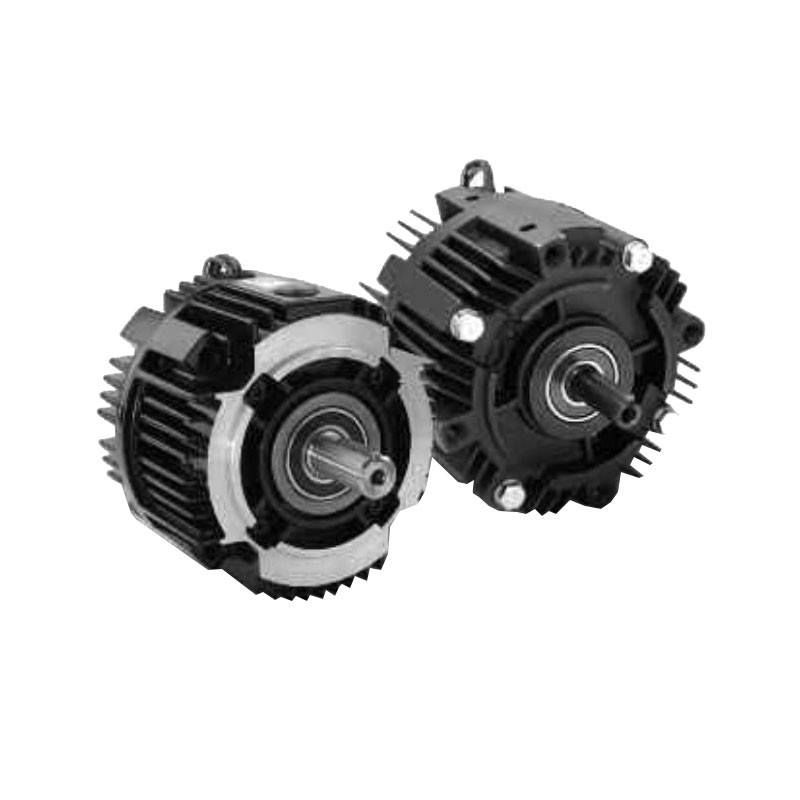
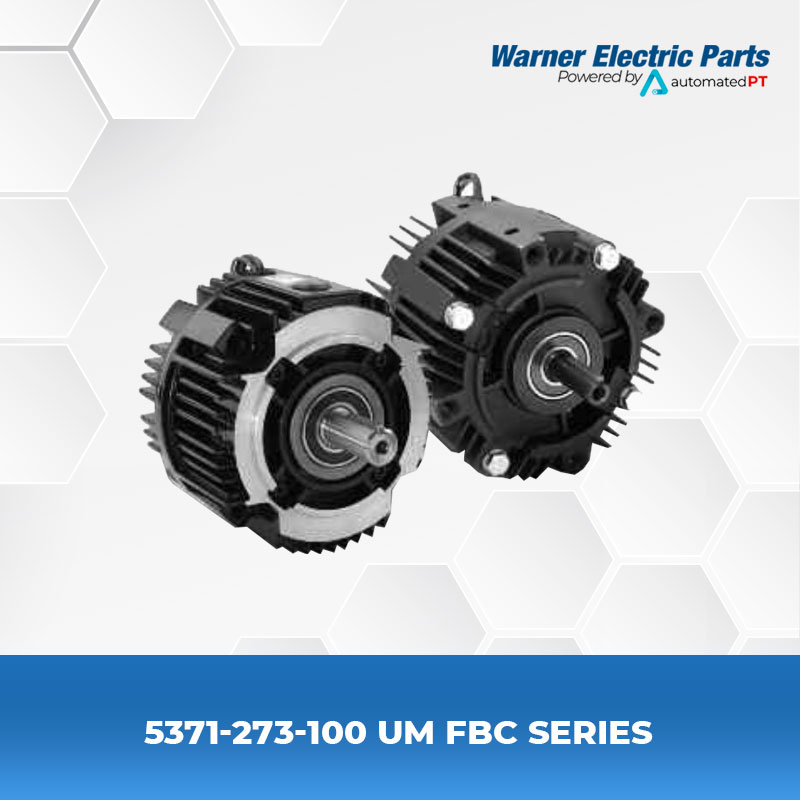
| Model | UM-215-2030FBC |
| Static Torque (Brake) | 56 lb. ft. |
| Static Torque (Clutch) | 95 lb. ft. |
| Voltage | 24V DC |
| Maximum Speed | 3600 RPM |
| NEMA Frame Size | 213TC / 215TC |
| Mounting Style | Base Mounted / Shaft-In to Shaft-Out (Input Clutch / Electrically Released Brake) |
| Shaft Diameter (D) In Inches | 1.375 (1-3/8″) |
| Keyway Size In Inches | 5/16 x 5/16 |
| Optional Accessories & Components | |
|---|---|
| Conduit Box (All Sizes) | 5370-101-042 |
| Base Mount Kit (Size 210/215) | 5371-101-019 |
| Motor Mount Kit (Size 210/215) | 5371-101-012 |
| Catalog | Warner Electric UM-FBC Series Electrically Released Brakes Catalog |
SERIES DESCRIPTION
The Warner Electric UM-FBC Series combines the convenience of pre-assembled, one-piece inline components with fail-safe, power-off braking utility. Factory pre-aligned and pre-burnished to supply rated dynamic performance straight out-of-the-box, these specialized UniModule assemblies easily bolt down and wire up directly to industry-standard NEMA C-face motors and power transmission systems. The standout design replaces traditional mechanical coil springs with high-power permanent magnets that exert full stopping torque when power is removed. Applying electrical power to the braking circuit nullifies this magnetic hold, allowing friction surfaces to release cleanly for precision dynamic cycling environments without lubrication or ongoing manual air gap compensation.
FEATURES
- Permanent Magnet Design: Employs raw magnetic force to deliver maximum structural clamping torque when electrical power is disconnected from the braking circuit.
- Electrically Released Operation: Releases internal braking elements smoothly as soon as standard direct current coil excitation nullifies the permanent magnetic pull.
- Spring-Free Responsiveness: Eliminates physical return springs from the assembly to mitigate component fatigue, sustaining responsive high frequency index speeds.
- Factory Pre-Burnished: Hardworking fields, rotors, and dual armatures are completely run-in during production to yield immediate field torque ratings upon setup.
- Easy Enclosure Retrofits: Open vented frames can be quickly converted into quiet, totally enclosed layouts via bolt-on optional cover plates to keep contaminants separated from working friction faces.
- Zero Maintenance Overhead: Permanently sealed internal alignments run smoothly without periodic oil lubrication, adjustment cycles, or operator upkeep.
SELECTION PROCEDURE
- Define Mounting Architecture: Determine if system design parameters require standard direct motor face integration (1020 Configuration) or dual inline input/output shaft extensions (2030 Configuration).
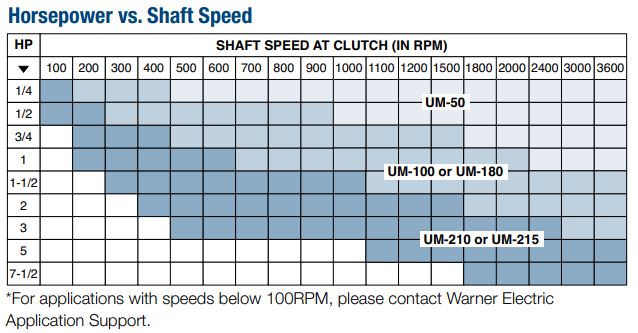
- Verify Chassis Sizing Suffix: Locate your designated structural profile and horsepower requirements on the technical sizing matrix to choose between core chassis sizes 50 up to 215.
- Analyze Thermal Heat Loading: Slipping action generates friction heat during starting intervals; evaluate total reflected load inertia and cyclic parameters using the thermal calculation formula E = 1.7 * WR^2 * (N/100)^2 * F.
- Cross-Check Dissipation Curves: Contrast total derived calculation energy output criteria against standard temperature limit indexes to secure adequate field runtime safety margins.
HOW TO ORDER
- Specify Base Model Number: Combine the primary sizing prefix with your target configuration layout code and the FBC string, such as UM-215-2030FBC.
- Choose Input Voltage: Select from standard low-voltage control circuits by choosing between 24V and 90V DC coil part number configurations.
- Incorporate Specialized Mount Kits: Supplement core modular blocks with custom rigid base plates or specialized structural C-face motor mounting brackets.
- Add Variable Torque Control: Pair your hardware with adjustable external power supplies like the CBC-300 or CBC-500/550 systems equipped with potentiometers to vary your brake channel output dynamically.
Got a Question? We're Here To Help
- For Manuals, Catalogs & Documentation: See Files Section
- Need More Help? Contact Us